Back to Home
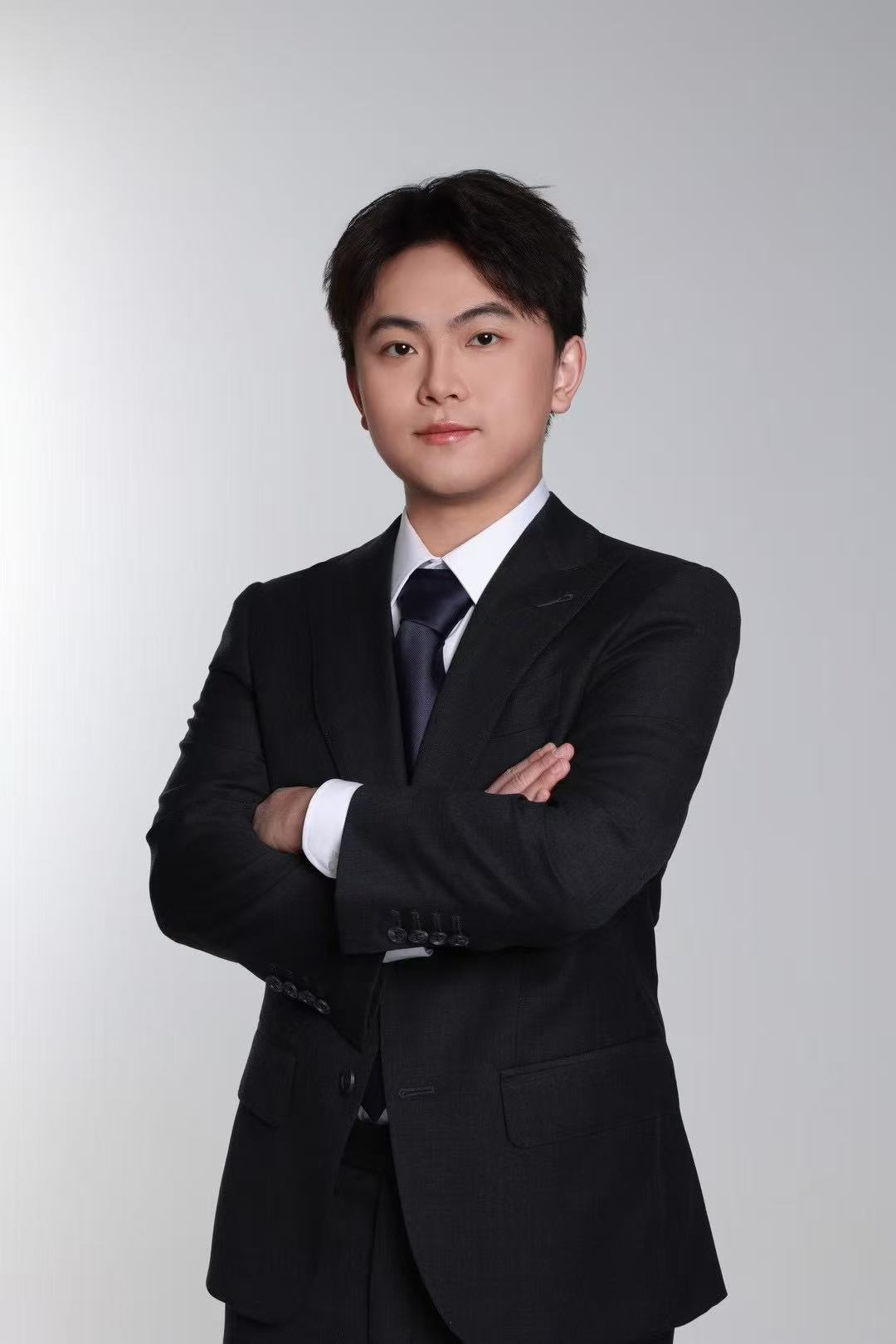
Yuhan Cheng
About

Yuhan Cheng

(Steven)

Full-Stack AI Engineer | AI Agents Developer | LLM Orchestration | Multi-Agent Systems | Quant Modeling | ML / DL | DApp Development

Hong Kong · Shenzhen · Beijing

M.Eng. in Machine Learning from the University of Toronto. I build full-stack AI systems — from in-house multi-agent orchestration to LLM-driven analysis pipelines, from quantitative modeling to decentralised applications — and care most about the path from research to production.

Trained at the University of Toronto: a double major in Statistics and Economics for the undergrad (academic scholarship, GPA 3.49 / 4.0), then an M.Eng. in Machine Learning and Data Analytics. Coursework spans deep learning, NLP, large language models, transformers, reinforcement learning, AI Agents, MCP, LangChain / LangGraph, RAG, blockchain and cloud — the modern AI stack, paired with the statistical and econometric grounding that shapes how I think about data.

At Chinasoft International I work on an in-house Multi-AI-Agents orchestration framework (no LangGraph) for AI recruitment, driving the migration from Kafka to Inngest and the backend from Python to TypeScript. Before that, at DMD Building Systems, I led an LLM-powered DXF drawing parsing platform that replaced manual CAD annotation in the firm's BIM pipeline and tripled parsing throughput. My personal projects span a financial-intelligence multi-agent platform (Finlyze AI · LangGraph DAG + chatbot harness + CodeAct sandbox, live at finlyze.ai), an AI tutorial-video tutor (LangChain + Manim multi-agent pipeline), and a blockchain DApp (Solidity smart contracts on Ethereum).

Education
2023.09 – 2025.06

University of Toronto

M.Eng. in Machine Learning & Data Analytics
Deep LearningNLPLarge Language ModelsTransformerBlockchain & CryptoCloud-based Data AnalyticsAI in FinanceAI AgentsMCPLangChainLangGraphRAG
2018.09 – 2022.11

University of Toronto

Honor B.Sc. · Economics & Statistics (Double Major)
Academic Scholarship · GPA 3.49 / 4.0
Methods of Data AnalysisTime Series AnalysisForecasting EconometricsSampling & Observational DataLinear AlgebraProbability TheoryMicroeconomic Theory
Experience
2026.02 – Current · Beijing

Chinasoft International

AI Agents Software Engineer · Full-time, On-site
  • Working in the AI recruitment domain — candidate parsing, job-requirement understanding, candidate-to-role matching, multilingual content generation. Built an in-house Multi-AI-Agents orchestration framework (no LangGraph) driven by events, wiring an end-to-end pipeline: Clarify → Requirement → Entity Parsing → Matching → Validation → Auto-Correction → HITL review.
  • Led the migration of the event bus from Kafka to Inngest with dual-track compatibility, and refactored the backend from Python to TypeScript (Node + Next.js); built an observability panel for the previously opaque async agent chain — agent state, rule execution, logs, and version rollback.
  • Addressed noisy, conflict-prone business data with an in-house Semantic / Logic / Syntax 3-layer validation system and an Auto-Correction repair loop, combined with reverse attribution (probabilistic localization across DataObject / Rule / Relation) for iterative refinement — materially raising first-pass quality.
  • Applied Context Engineering and Progressive Disclosure to design Agent Skills / Tools selection; distilled internal business knowledge into Claude Code-embedded Skills and an Obsidian Wiki graph knowledge base, loaded on demand to cut prompt noise and token cost.
  • Studied and applied state-of-the-art agent design principles from Wiki LLM, Hermes Agents, Harness Engineering, and OpenClaw; leveraged Claude Code / Gemini / Codex for Vibe Coding to compress 1–2 week features and refactors into a few days.
2025.03 – 2025.10 · Toronto

DMD Building Systems

AI Software Engineer · Full-time, On-site
  • Led the creation of an LLM-powered DXF drawing parsing and classification platform that automated annotation and archiving of CAD drawings, replacing slow manual workflows in the firm's BIM/CAD pipeline.
  • Built a Python + LLM pipeline: DXF parsing to block exploding, parent-child traversal to record chain information, semantic classification to identify wall / door / window / text-annotation categories.
  • Used the ezdxf library to build an ancestor-descendant dictionary for GPT/Gemini context, added parallel caching and incremental updates — tripled parsing speed.
  • Delivered JSON outputs and visual annotations automatically written back to the design-management platform, closing the loop from analysis to actionable design data.
  • Researched and synthesised the latest AI-for-AEC (Architecture, Engineering & Construction) literature, designing end-to-end system architectures and delivering technical reports.
Selected Projects

Finlyze AI — Financial Intelligence Platform

2026.01 – Current
Full-stack multi-agent · Chatbot harness · CodeAct sandbox · Quant forecasts + persona debates. Live at finlyze.ai.

A full-stack AI financial-analysis platform (FastAPI + LangGraph + Next.js 16) for individual investors, covering US and Hong Kong equities and crypto, live at finlyze.ai. A coordinator plans a DAG over a registry of 70+ agents; compound questions go to a CodeAct sandbox, where the model writes one Python block that is AST-checked, executed in isolation (rlimit / Docker / remote sandbox service) and critiqued by chart QA, code review and log review with a repair loop. A production harness wraps every route: intent triage and a clarify gate, an event ledger with replayable runs, a point-in-time gate against look-ahead, one finalize pipeline (numeric verification → qualitative-claim check → answer eval and repair → artifact routing), a cost ledger with circuit breakers over an 8-provider model gateway, and a skill incubation → evaluation → promotion loop behind admin approval. Product surface: AI chat with an Agent Run panel, horizon-exact Monte Carlo forecast cards, deep-analysis reports with PDF variants, a 12-persona debate room, watch rules with web push, AI stock discovery, generated courses with quizzes, an admin console, billing, MFA and GDPR export. About 160k lines of code, 2,800+ tests, bilingual, phone-ready.

FastAPILangGraphNext.js 16PostgreSQLRedisDockerClaudeGPTGeminiOpenRouterPlotlyGARCHMonte Carlo

AI Tutorial Video Generation System

2025.06 – Current
LangChain RAG · Multi-agent Manim pipeline · Bilingual lectures from plain text.

A pure-LangChain RAG learning system: ingests PDFs/DOCX, extracts knowledge points via Hybrid Contextual Batching (deduplication-at-extraction-time), builds personalised learning paths with milestones, and hands selected lessons to a multi-agent Manim pipeline that renders bilingual narrated tutorial videos. KYC-driven personalisation tracks learner state across sessions. AsyncIO streaming pipeline with a 16-worker pool brings generation time from ~10 min to under 2 min. Multi-model orchestration (GPT-5 / GPT-4 / Claude / Whisper) with fallback routing, exponential backoff, Manim syntax validation and AI-driven error correction — 98% automated recovery, ~40% API cost reduction via content-aware caching.

LangChainLangGraphMCPFAISSManimAsyncIOFastAPI

Decentralised Voting Platform (DApp)

2024.03 – 2024.04
Ethereum · Solidity smart contracts · Transparent, auditable voting.

Smart contracts in Solidity; seamless chain interaction through web3.js and TruffleContract; responsive UI in HTML / CSS / JS. Full functionality, security and transparency testing on the Ganache testnet. Git-based version control.

Solidityweb3.jsTruffleEthereumGanache
Skills
Languages
Mandarin (native)English (fluent)
Programming & Data
PythonTypeScriptJavaScriptSQLRSparkHadoopTableauGit
AI / Agents / LLM
AI AgentsMCPACPLangChainLangGraphClaude CodeGeminiCodexContext EngineeringProgressive DisclosureRAG / ChromaDBPyTorchDeep Learning
Backend / Infra / Events
FastAPINext.js / ReactKafkaInngestDockerAzureDatabricksHugging FacePlotlyNeo4jObsidian
Quant / Web3
GARCHEVTKalmanHMMSolidityweb3.jsTruffle
Write

If something here resonates — or if you have something to build together — write. I read every message.

© Yuhan Cheng — Personal Portfolio